
El Paso County Genealogy Records Search
If you are searching El Paso County genealogy records, the County Clerk in El Paso is your main starting point. Records go back to 1850 and include vital statistics, deed books, probate files, and court documents. This page covers the key sources, how to access them, and what you can expect to find.
El Paso County Overview
El Paso County Clerk Records Office
The El Paso County Clerk is the main office for genealogy records in the county. The clerk holds vital records, land records, and probate files. You can visit in person at the El Paso County Courthouse in El Paso, or check El Paso County Clerk website for available online searches.
El Paso County was organized in 1850 and has been collecting official records since then. Early records date from the county's founding. The county seat has been El Paso throughout most of the county's history. Most genealogical researchers start at the County Clerk's office when searching for El Paso County family records.
The county clerk holds marriage licenses, birth and death records, deed records, and probate filings. Land records and deeds often go back furthest and can document property ownership through multiple generations of a family. Probate files list heirs, ages, and relationships, making them especially valuable for genealogy.
El Paso County Clerk - the primary office for El Paso County genealogy records.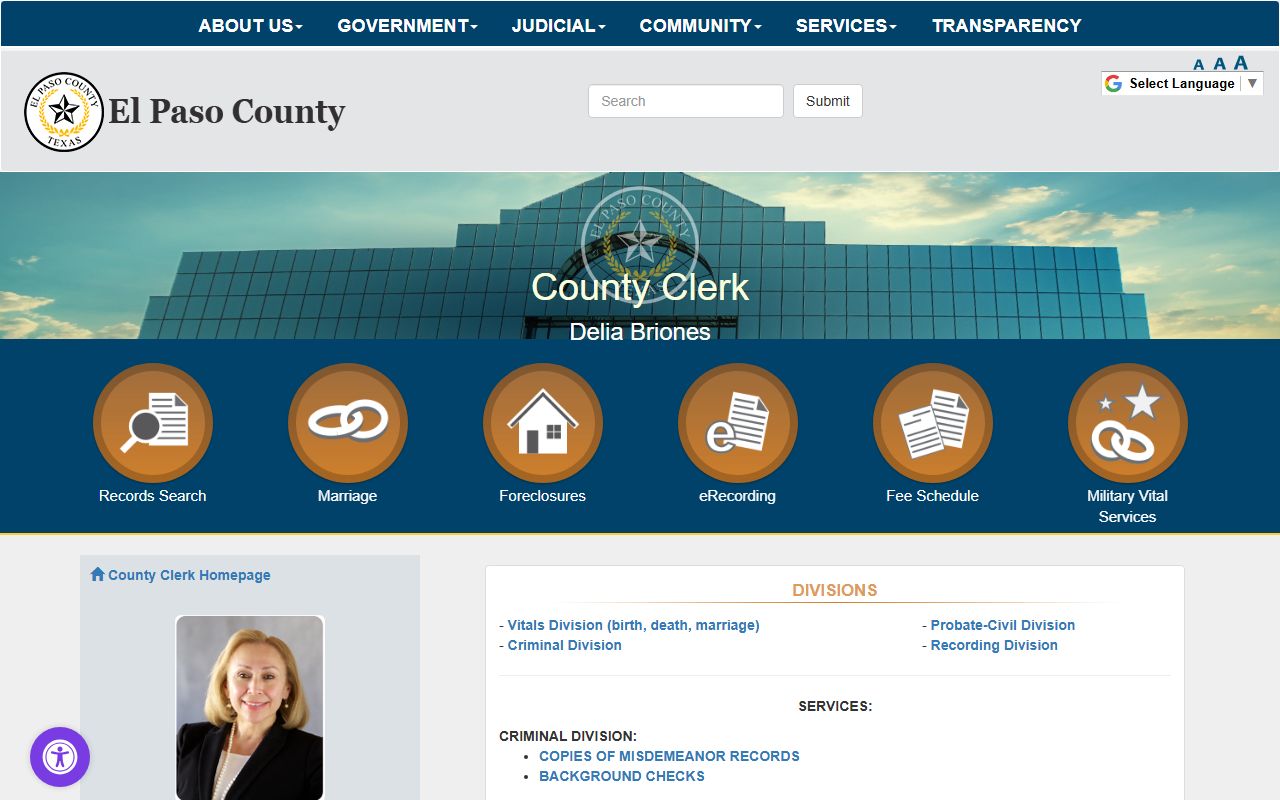
The El Paso County Clerk portal shown above provides access to record indexes and document request forms for genealogy researchers.
El Paso County offers additional access to El Paso County records.
This additional resource provides supplementary access to El Paso County genealogy collections.
Vital Records in El Paso County
Birth and death records in Texas were not required by the state until 1903. Before that date, the county clerk kept some records, but coverage was uneven. For El Paso County, early vital records may appear in family bibles, church registers, and cemetery transcriptions rather than official government files. After 1903, birth and death certificates were filed with both the county and the state.
The Texas Department of State Health Services holds the statewide vital records collection. For recent records, you can order certified copies through their office. Older records that have passed their protection period are available through the Texas State Library and Archives Commission (TSLAC) in Austin.
Marriage records in El Paso County date back to 1850. The county clerk holds marriage license applications and returns. These records include names, ages, and sometimes the names of parents or witnesses, making them valuable for genealogy. Death records filed after 1903 often list the birthplace and parents of the deceased.
Note: Texas birth records are sealed for 75 years and death records for 25 years from the date of the event.
Land and Probate Records for Genealogy
Land records are some of the best genealogy tools available in Texas. They predate formal vital records by decades, and El Paso County deed books go back to the county's formation. Deeds record the transfer of property and often include the names of grantors, grantees, and witnesses. Over time, you can trace a family's movements, purchases, and sales of land.
Probate records filed with the El Paso County Clerk include wills, estate inventories, guardian appointments, and court orders related to settling estates. These files can be extremely detailed. A will may list the names and residences of all children and grandchildren. An estate inventory may describe property in ways that bring family life to light. If an ancestor died in El Paso County, the probate file may be the richest single source of genealogical data available.
The Portal to Texas History, maintained by the University of North Texas Libraries, has digitized many historical Texas newspapers and some county records. Searching for El Paso County in their collections can turn up obituaries, legal notices, and land sale announcements.
State and Online Resources for El Paso County Ancestry
Several statewide resources support El Paso County genealogy research. The Texas State Library Digital Archive includes historical county records that have been microfilmed and digitized. The TXGenWeb Project maintains a county-level page for El Paso County with contributed indexes, transcriptions, and research tips from volunteers.
The National Archives at Fort Worth holds federal census records, land entry files, military pension records, and other federal documents relevant to El Paso County families. U.S. Census records from 1850 through 1940 are available there and through many online platforms. El Paso County appears in federal censuses from its organization date forward.
The Texas State Genealogical Society (TxSGS) offers research guides, publications, and seminars that cover Texas counties including El Paso County. Their resources are especially useful for researchers tracing families across multiple counties. The local public library in El Paso County also maintains genealogy resources and can help you navigate available records.
FamilySearch maintains free access to many Texas records through their website at familysearch.org. Texas vital records, census data, and other historical documents are searchable there. The Texas Historical Commission maintains a Texas Historic Sites Atlas that includes historic cemeteries, markers, and sites across the state.
Church and Cemetery Records in El Paso County
Churches in El Paso County were recording baptisms, marriages, and burials long before the state required official vital records. Protestant and Catholic congregations throughout the area kept registers that survive in some cases at local churches, archives, and historical societies. These records can fill gaps left by courthouse fires or incomplete official records.
Cemetery records are another key source. Many El Paso County cemeteries have been transcribed by volunteers and local genealogical groups. The Texas State Genealogical Society and affiliated county societies have published cemetery indexes for many Texas counties. Online cemetery databases like Find A Grave and BillionGraves also include El Paso County burials.
The Texas General Land Office at glo.texas.gov maintains historical land grant records that can help you trace early settlers in El Paso County. Original land grants and surveys often include names, dates, and descriptions that supplement other genealogical records.
Major Cities in El Paso County
These cities in El Paso County have dedicated genealogy resource pages.