
Look Up Dallas Family History Records
If you are searching for Dallas genealogy records, the starting point is the Dallas County Clerk's office. Texas cities rely on county and state systems for vital records, court documents, and land filings. This page explains where to find those records, what local libraries and societies hold, and how to use online tools to research your Dallas ancestry.
Dallas Overview
Dallas County Records for Dallas Families
Dallas is in Dallas County, and the Dallas County Clerk is where you find most genealogy records for families who lived here. The clerk holds birth and death records from 1903, marriage licenses going back further, deed records, and probate files. These records cover the entire county, including Dallas and surrounding communities.
The Dallas County genealogy records page covers the clerk's office address, hours, phone number, and online access tools in detail. Land records and deed books are among the oldest records in the county and can trace property ownership through multiple generations. Probate files are especially rich for genealogy, often listing heirs, ages, and family relationships.
For records before 1903, the county may have earlier marriage registers, deed books, and some probate files. The exact start date depends on when Dallas County was organized. For events in the Spanish or Mexican period, check the Texas General Land Office for land grant records and the Catholic Archives of Texas for sacramental records.
Vital Records for Dallas Genealogy
Texas vital records are maintained at two levels. The state holds the master collection at the Texas Department of State Health Services. The county clerk holds a local copy. For genealogy purposes, both sources can be useful. The state collection is more complete for modern records. The county collection may include older documents not in the state system.
Birth records are sealed for 75 years in Texas. Death records are sealed for 25 years. After those periods, the records become available to the public through the Texas State Library and Archives Commission (TSLAC). If you are researching a recent death or birth, you need to be a qualified requester such as a direct family member or their authorized representative.
Marriage records in Texas have no statewide confidentiality period. You can request marriage record verifications from the Texas Department of State Health Services. Copies of the original license are held by the county clerk. The county clerk's records often go back further than the state's marriage index, so check both sources.
Note: For records of births and deaths that occurred in Dallas before the county or state system was established, check church records, family bibles, and cemetery transcriptions held by local historical societies.
Library Genealogy Resources in Dallas
The Dallas Public Library - Genealogy Collection offers major genealogy collection including Texas Newspaper Archives, family history books, and Ancestry Library Edition access. It is one of the key resources for researchers tracing Dallas and Dallas County families.
| Library | Dallas Public Library - Genealogy Collection |
|---|---|
| Address | 1515 Young St, Dallas, TX 75201 |
| Phone | (214) 670-1400 |
| Website | https://dallaslibrary2.org/genealogy/ |
Public libraries in Texas typically offer free access to genealogy databases like Ancestry Library Edition and HeritageQuest Online during library hours. These databases include U.S. census records, military records, immigration files, and digitized newspapers. Check the library's website for current hours and available resources.
State Resources for Dallas Genealogy Research
Several state-level resources support genealogy research for Dallas families. The Texas State Library and Archives Commission (TSLAC) holds the largest collection of Texas genealogy materials in the state. Their archives include county records on microfilm, city directories, newspapers, census materials, and published family histories. Texas residents can access Ancestry.com free through their local library or TSLAC account.
The Portal to Texas History from the University of North Texas has digitized historical newspapers, photographs, maps, and some county records. Searching Dallas and Dallas County in that database often turns up obituaries, legal notices, and community announcements that supplement official records.
The National Archives at Fort Worth holds federal records relevant to Dallas families, including census records from 1850 through 1940, military pension files, land entry records, and naturalization papers. Federal census records are especially valuable for locating families and tracking them across generations.
The Texas Historical Commission maintains a statewide database of historic cemeteries and markers. If you know where an ancestor was buried in or near Dallas, this database can help you locate the cemetery and find additional burial records.
Dallas County Records Online
Dallas County Clerk - the primary online portal for county genealogy records serving Dallas and surrounding communities.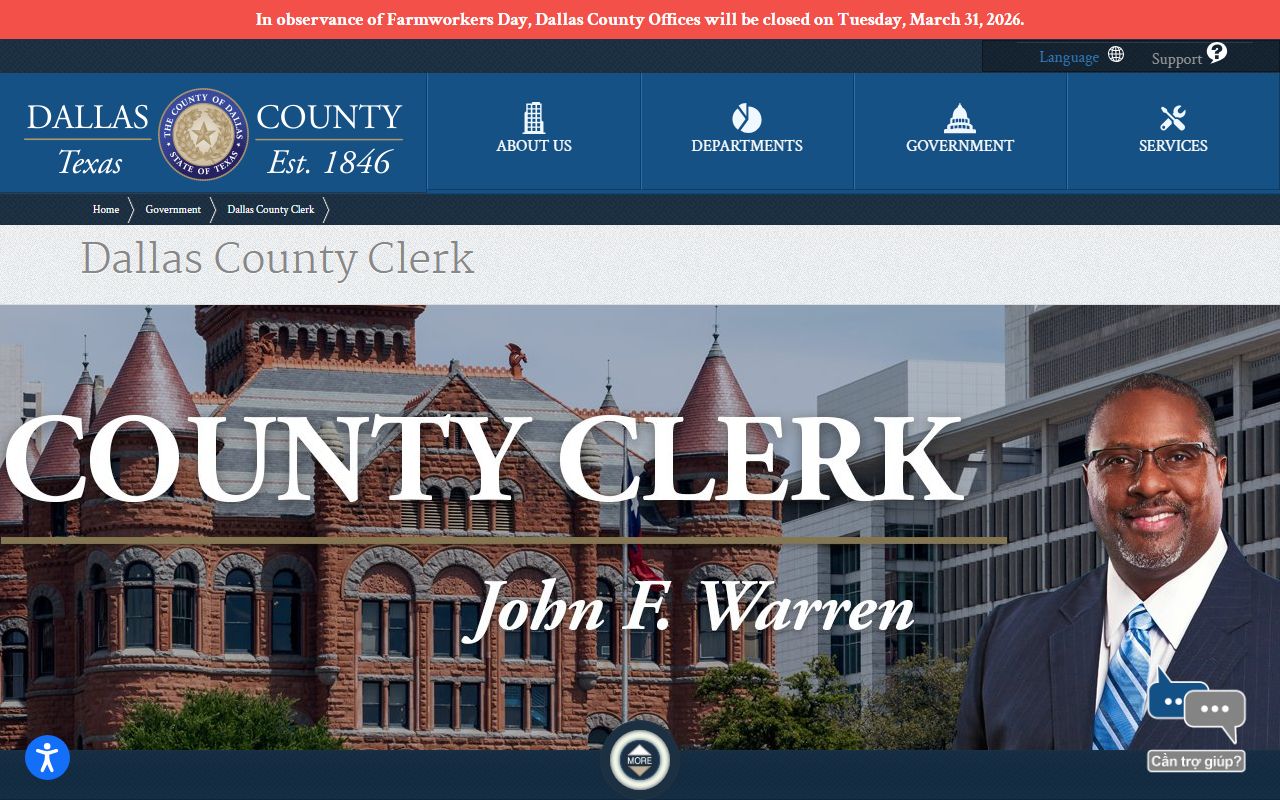
The county clerk portal shown above is the starting point for most Dallas area genealogy searches, providing access to deed indexes, marriage records, and other public document filings.
Dallas County Genealogy Resources
Dallas is in Dallas County. The county clerk holds the primary genealogy records for all communities in the county. For detailed information on the clerk's office, courthouse address, record availability, and online tools, see the Dallas County genealogy records page.
Nearby Texas Cities
These nearby cities also have genealogy resource pages. Each page covers the county clerk and local resources for that area.